CASE STUDY: Bahrain World Trade Center — Bahrain
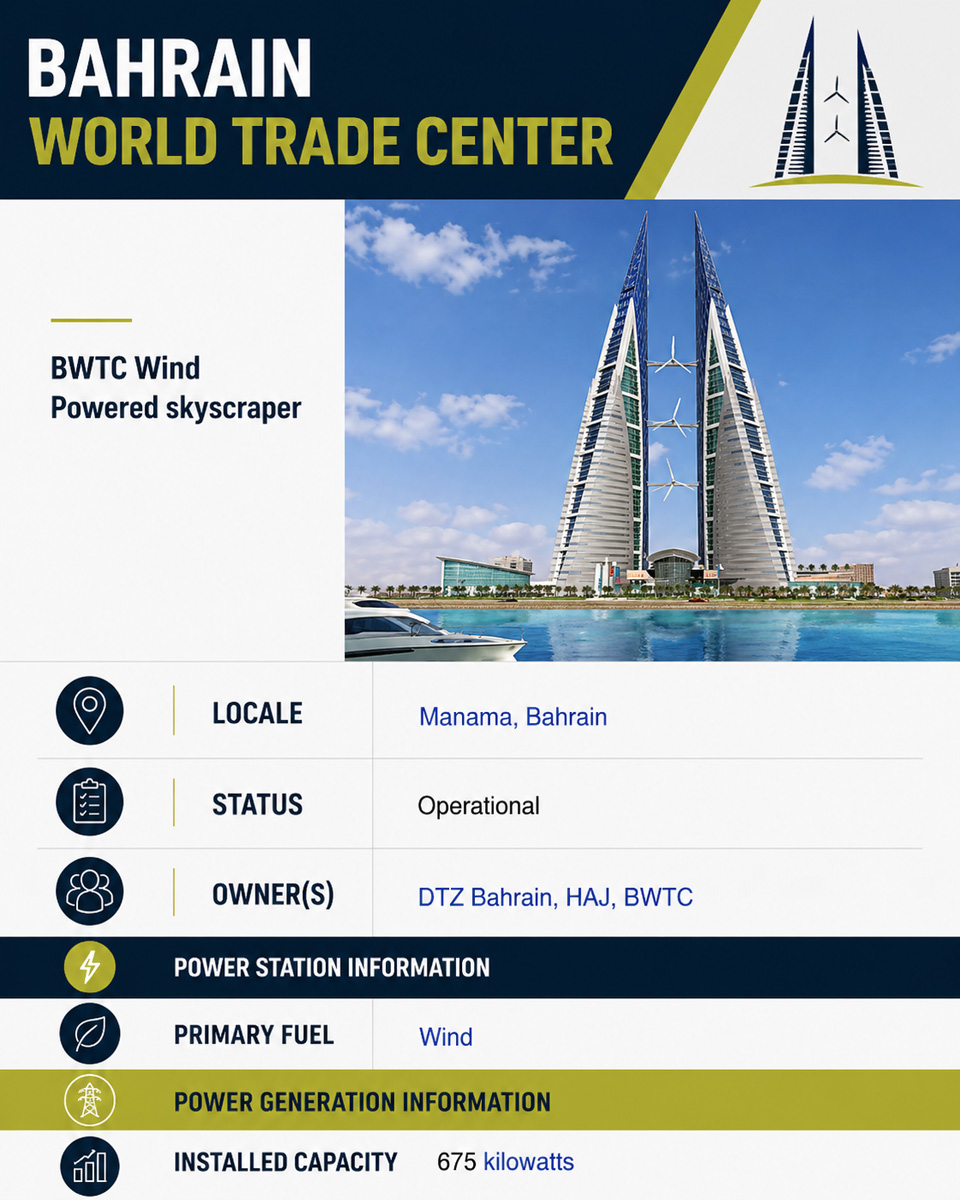
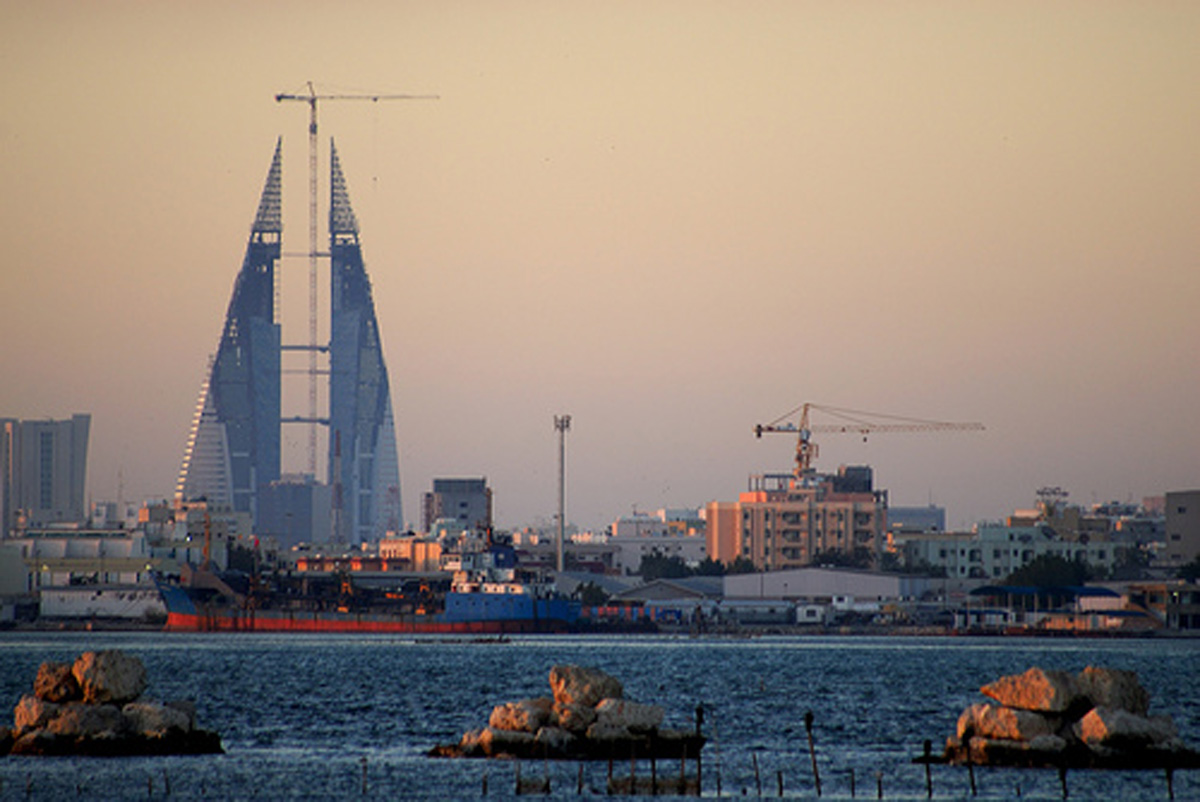
The Bahrain World Trade Center in Manama, Bahrain, is internationally recognized as the world’s first wind-powered skyscraper and one of the most innovative examples of renewable energy integration within commercial architecture. The landmark development incorporated large-scale wind turbines directly into the structural design of a twin-tower high-rise complex, creating a globally recognized model for sustainable urban infrastructure.
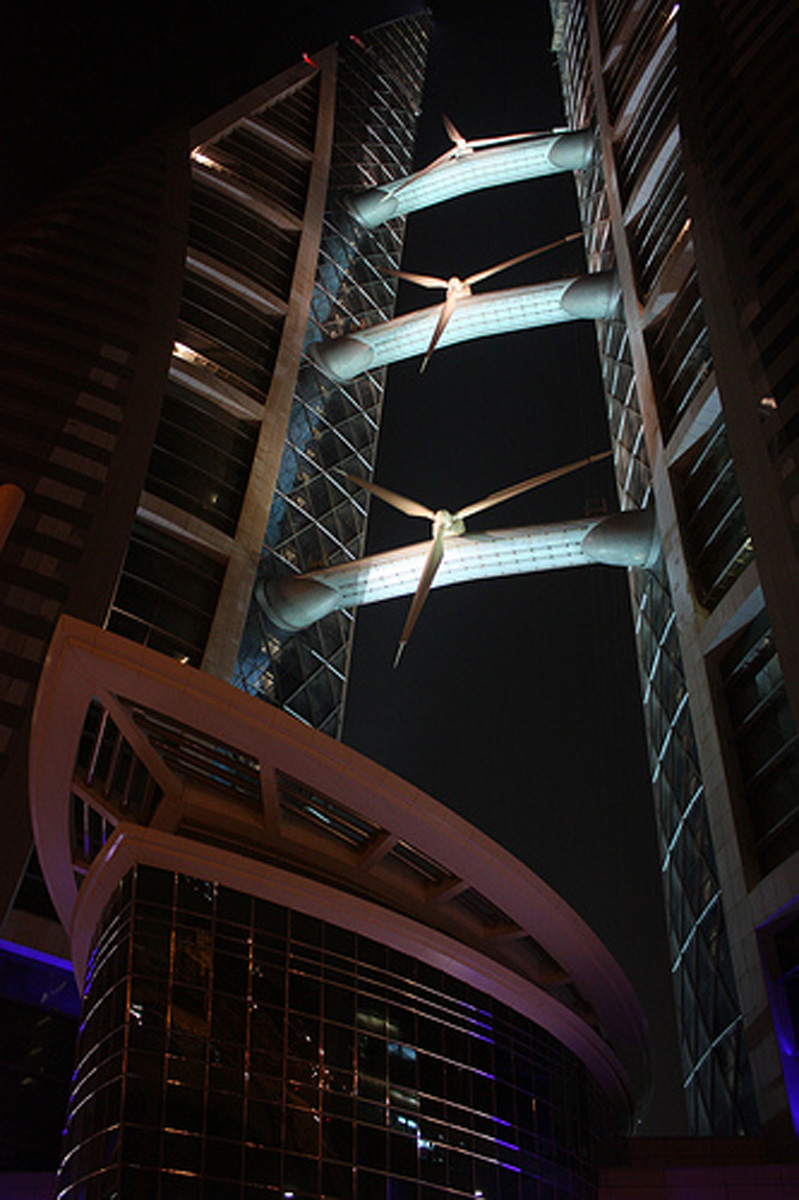
The project consists of two sail-shaped towers connected by bridge structures that support horizontal-axis wind turbines positioned to capture prevailing coastal wind currents from the Arabian Gulf. This groundbreaking integration of renewable energy technology into a commercial skyscraper demonstrated how architectural design and sustainable energy systems could operate together within dense urban environments.
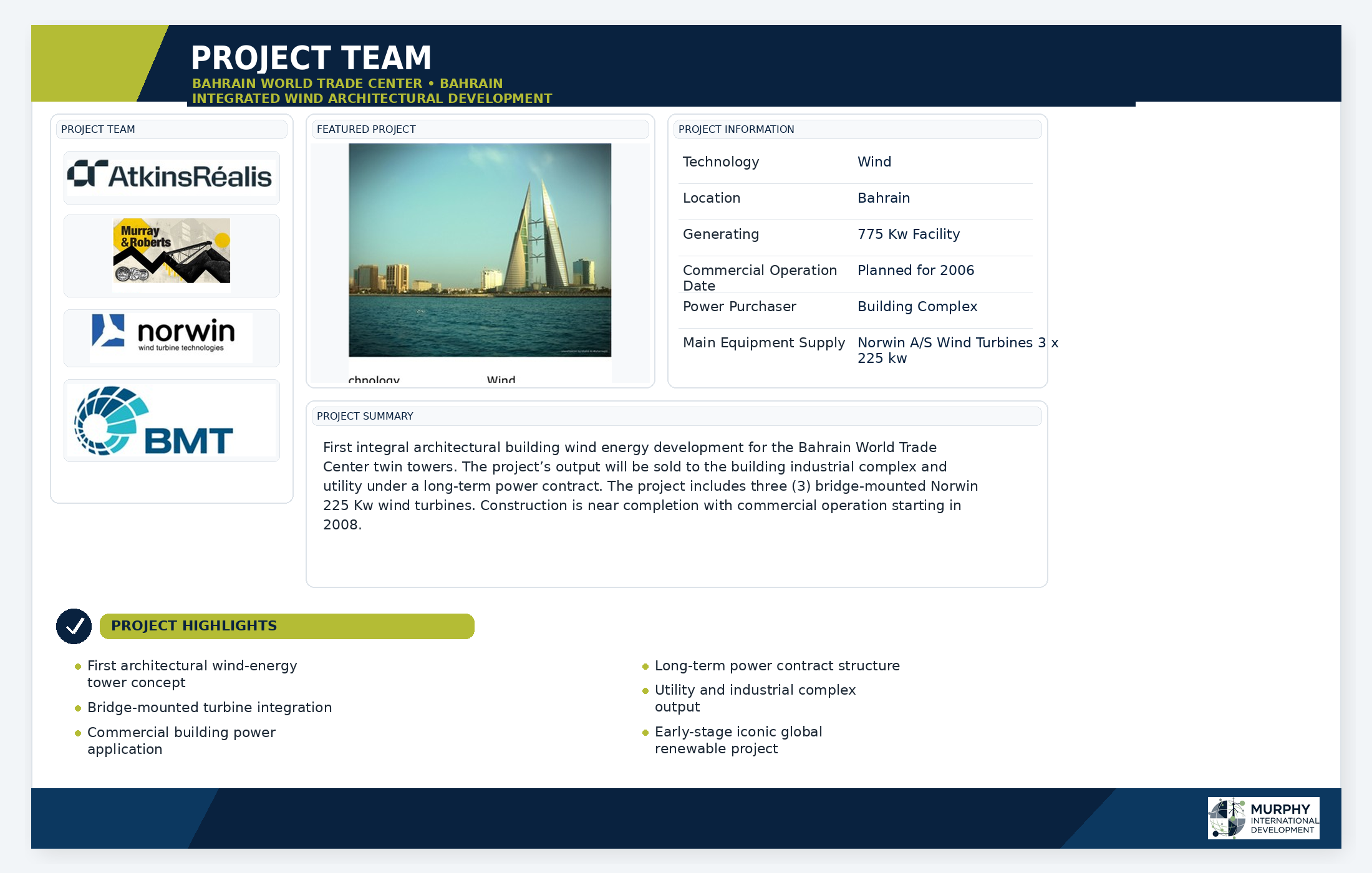
Murphy International Development supported renewable energy development efforts associated with this globally recognized project as part of its broader involvement in advanced wind energy integration and sustainable infrastructure initiatives. The Bahrain World Trade Center helped establish a new international benchmark for renewable energy innovation within commercial real estate development.
Innovative Sustainable Architectural Design
The Bahrain World Trade Center was designed not only as a commercial office complex, but also as an integrated renewable energy system. The aerodynamic profile of the twin towers was engineered specifically to funnel and accelerate wind between the structures, increasing turbine efficiency and maximizing energy production potential.
Unlike traditional renewable energy retrofits, the wind turbines were incorporated directly into the original architectural and structural design of the development. This level of integration required advanced coordination between architectural planning, structural engineering, wind analysis, and electrical infrastructure design.
The project demonstrated that renewable energy technologies could become an intentional component of large-scale commercial architecture rather than simply an add-on feature.
Integration of Wind Energy into Urban Infrastructure
At the time of development, large-scale wind integration within urban commercial buildings was still considered highly experimental. The Bahrain World Trade Center helped demonstrate the practical and commercial viability of integrating renewable power generation directly into high-profile urban developments.
The project advanced industry understanding in several critical areas:
- Building-integrated renewable energy systems
- Sustainable high-rise architectural design
- Urban wind energy generation
- Hybrid commercial infrastructure development
- Long-term energy efficiency within commercial real estate
The project became a globally recognized symbol of sustainable engineering innovation and helped encourage broader adoption of renewable technologies within commercial infrastructure projects worldwide.
Wind Turbine Engineering & System Performance
The wind turbines installed between the towers were strategically positioned to capture accelerated wind flows generated by the aerodynamic shape of the building complex. The geometry of the towers was specifically designed to direct prevailing coastal winds toward the turbines, improving efficiency and operational consistency.
The integrated renewable energy system contributed on-site electrical generation to the facility while demonstrating the feasibility of urban wind power integration within dense metropolitan environments.
The project required coordination across multiple engineering disciplines, including:
- Structural engineering
- Wind resource assessment
- Mechanical system integration
- Electrical infrastructure planning
- High-rise construction coordination
This multidisciplinary execution contributed to the project’s international recognition within both the renewable energy and architectural industries.
Global Recognition & Industry Impact
The Bahrain World Trade Center received significant international attention for its pioneering approach to renewable energy integration and sustainable architectural design. The project became one of the most referenced examples of building-integrated wind energy within modern commercial real estate development.
Its success helped advance global discussions surrounding:
- Sustainable urban development
- Renewable-powered commercial infrastructure
- Energy-efficient building design
- Integration of renewable systems into large-scale architecture
- Long-term reduction of commercial energy consumption
The project continues to serve as an influential benchmark for architects, engineers, developers, and renewable energy professionals worldwide.
Murphy International Development’s Role
Murphy International Development supported renewable energy development efforts associated with the Bahrain World Trade Center through its experience in wind energy project development, renewable infrastructure, and integrated energy solutions.
The project aligned with Murphy International Development’s broader commitment to advancing innovative renewable technologies and supporting sustainable infrastructure development across global markets.
Through involvement in projects such as the Bahrain World Trade Center, Murphy International Development continues to demonstrate its long-standing focus on renewable energy innovation, integrated project execution, and forward-thinking sustainable development strategies.