CASE STUDY: CHENACT AP — Caribbean Basin
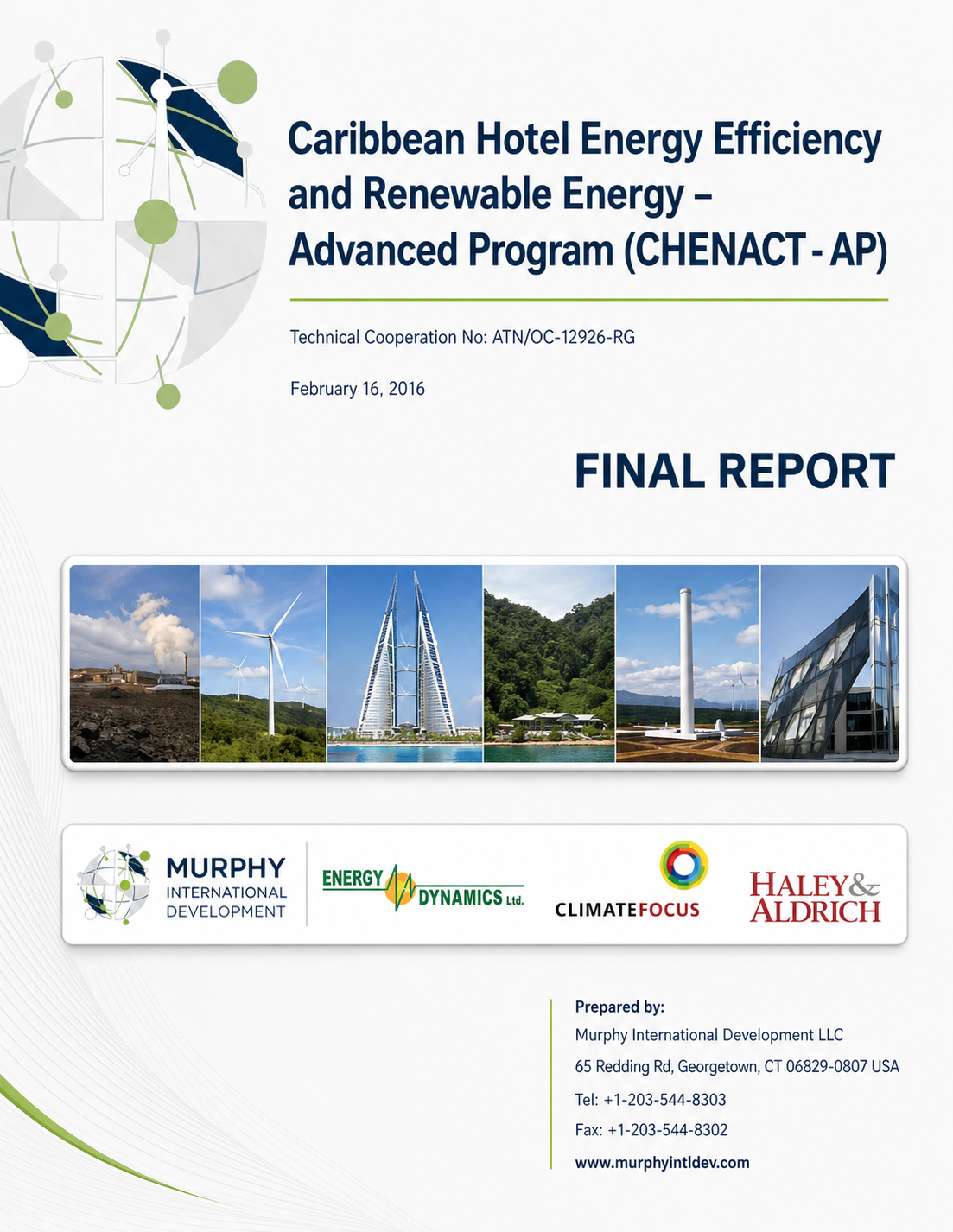
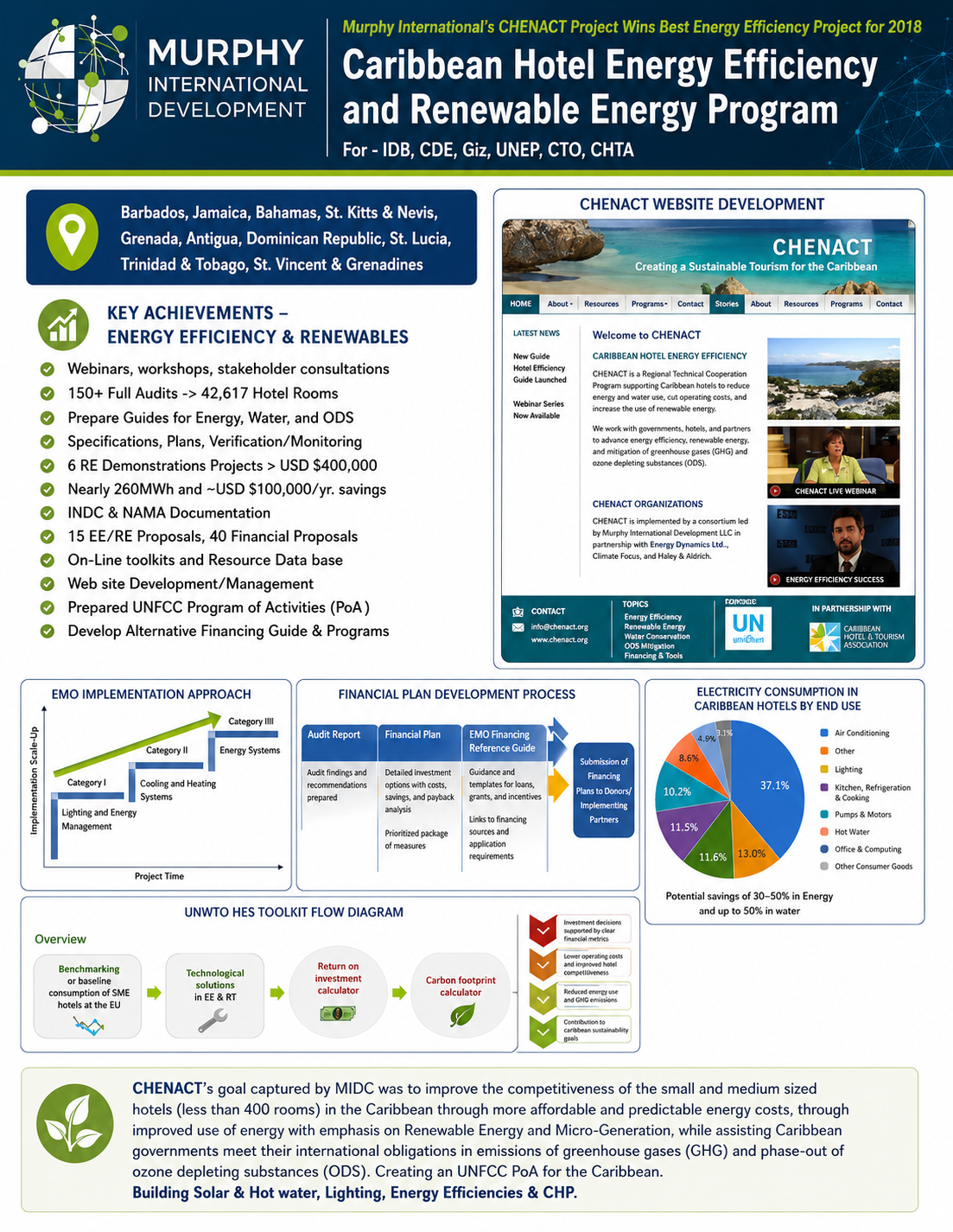
The Caribbean Hotel Energy Efficiency Action Programme (CHENACT AP) was a major regional initiative focused on improving energy efficiency and sustainability within the Caribbean hospitality sector. The program was developed to help hotels and tourism facilities reduce energy consumption, lower operational costs, and improve long-term environmental performance across island economies heavily dependent on imported fuel and energy-intensive infrastructure.
Originally financed by the Inter-American Development Bank (IDB) and supported by international development agencies, utilities, tourism organizations, and government entities, the initiative represented one of the Caribbean region’s most comprehensive hospitality-focused energy efficiency programs.
Murphy International Development supported project development and implementation efforts associated with CHENACT AP, contributing expertise in renewable energy systems, infrastructure planning, and sustainable energy development within island and distributed energy environments.
Regional Energy Efficiency Initiative
The Caribbean tourism industry faces unique operational and energy challenges due to geographic isolation, high utility costs, fuel dependency, and vulnerability to changing environmental conditions. CHENACT AP was designed to address these challenges by introducing energy efficiency measures and renewable energy strategies across hospitality facilities throughout the Caribbean Basin.
The program focused on improving:
- Energy efficiency within hotel operations
- Utility cost management
- Renewable energy integration opportunities
- Sustainability planning and implementation
- Long-term operational resilience
Participating facilities received technical guidance, assessments, and implementation support designed to improve overall energy performance while reducing environmental impact.
Supporting Sustainable Tourism Infrastructure
Tourism is a major economic driver throughout the Caribbean region, making energy efficiency and sustainability critical components of long-term economic resilience. CHENACT AP demonstrated how energy optimization strategies could support both environmental goals and operational performance within the hospitality sector.
The initiative helped promote:
- Reduced energy consumption and operating costs
- Improved building efficiency and system performance
- Integration of renewable energy technologies
- Sustainable tourism infrastructure development
- Increased awareness of energy conservation strategies
The program became an important model for sustainable hospitality development within island economies.
Technical Development & Implementation Support
Murphy International Development supported project development and implementation efforts associated with the initiative through its experience in renewable energy systems, distributed energy infrastructure, and sustainable project planning.
The program involved coordination between:
- Tourism organizations
- Government agencies
- Utility providers
- International development institutions
- Technical consultants and energy specialists
Murphy International Development’s involvement reflected its broader expertise in supporting regional sustainability initiatives and energy infrastructure development within complex operating environments.
Energy Efficiency & Renewable Integration
A key objective of CHENACT AP was identifying opportunities to improve energy efficiency while evaluating the integration of renewable energy technologies into hospitality operations.
Areas of focus included:
- Energy audits and facility assessments
- HVAC and lighting efficiency improvements
- Water heating optimization
- Renewable energy feasibility evaluation
- Long-term operational sustainability planning
The initiative demonstrated how energy efficiency programs could create measurable operational savings while supporting broader sustainability objectives.
Supporting Island Energy Resilience
Island economies often face elevated energy costs and increased exposure to fuel market volatility. Programs such as CHENACT AP play an important role in strengthening long-term energy resilience by reducing dependence on imported fuel and improving infrastructure efficiency.
The initiative contributed to broader regional goals involving:
- Sustainable development
- Reduced carbon emissions
- Improved infrastructure resilience
- Increased energy independence
- Long-term economic sustainability
Murphy International Development’s Role
Murphy International Development supported project development and implementation efforts associated with the CHENACT AP initiative through its experience in renewable energy infrastructure, distributed energy systems, and sustainable development planning.
The project aligned with Murphy International Development’s broader commitment to supporting renewable energy adoption, operational efficiency, and sustainable infrastructure development throughout the Caribbean Basin and international markets.
Through involvement in initiatives such as CHENACT AP, Murphy International Development continues to demonstrate its long-standing focus on energy efficiency, sustainability, and integrated renewable energy development strategies.