Strata Building — London, United Kingdom
CASE STUDY: Strata Building — London, United Kingdom
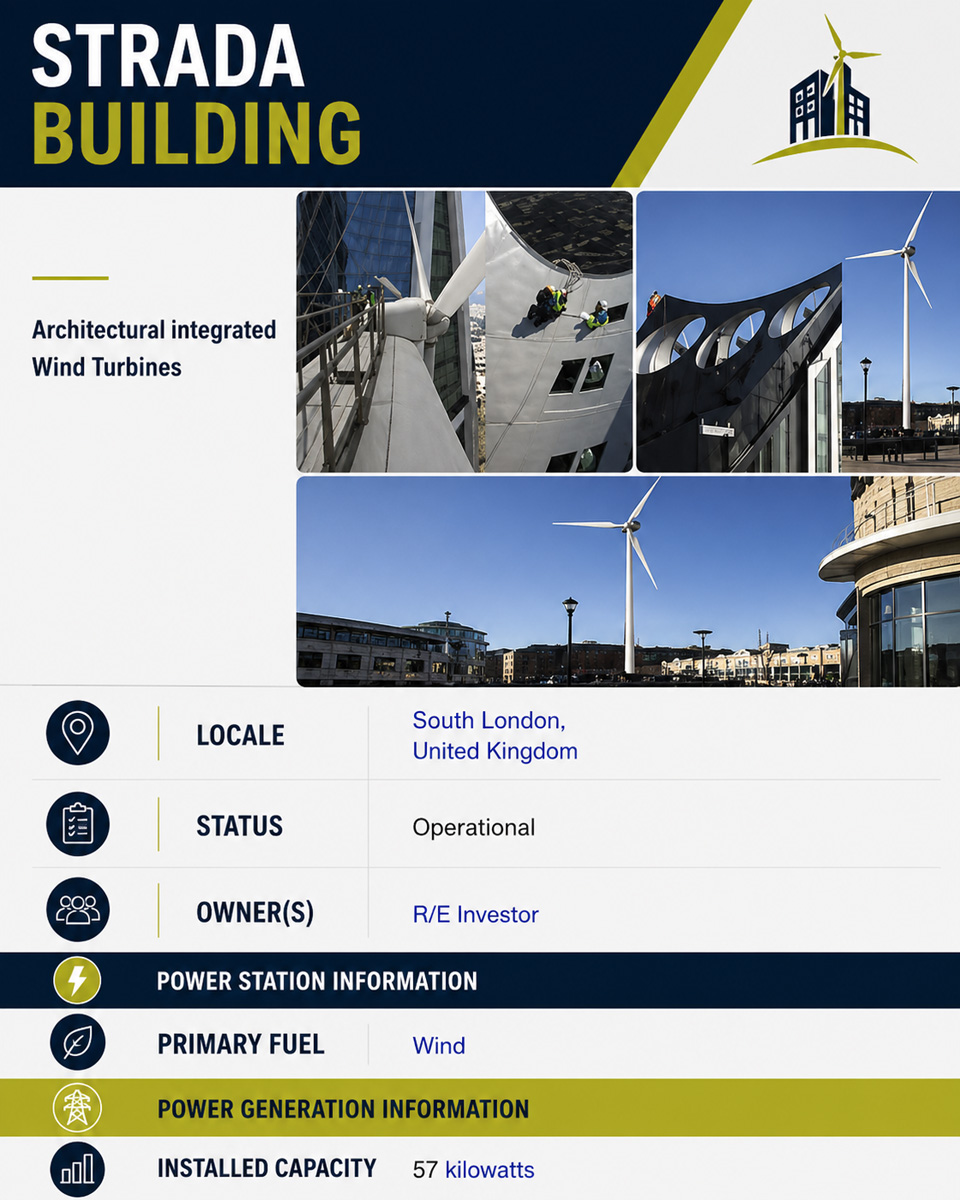
The Strata Building in London, United Kingdom, represents one of the most innovative examples of building-integrated renewable energy within modern urban architecture. Recognized as the first building in the world specifically designed to incorporate wind turbines directly into its structure, the development demonstrated how renewable energy technologies could become an active component of high-rise residential and commercial infrastructure.
The project integrated large-scale wind turbines into the upper structure of the building, allowing renewable power generation to contribute energy for the operation of common areas and shared building systems. The development became internationally recognized for its forward-thinking architectural design and its role in advancing sustainable urban infrastructure concepts.
Murphy International Development supported development initiatives associated with this pioneering renewable energy project, reinforcing its experience in hybrid energy systems, building-integrated renewable technologies, and innovative sustainable infrastructure development.
Building-Integrated Renewable Energy Design
The Strata Building was designed to combine modern high-rise architecture with renewable energy generation capabilities. Unlike traditional renewable energy retrofits, the wind turbines were incorporated directly into the building’s original structural and architectural framework.
The integrated turbine system was positioned within the upper portion of the tower to maximize exposure to prevailing wind flows while maintaining compatibility with the building’s overall structural and aesthetic design.
The project demonstrated how renewable technologies could be integrated into dense urban developments while supporting both operational efficiency and architectural innovation.
Urban Renewable Energy Innovation
As cities worldwide continue pursuing sustainability goals and energy efficiency improvements, projects such as the Strata Building highlight the growing role of renewable energy within urban environments.
The development advanced industry discussion surrounding:
- Building-integrated renewable energy systems
- Sustainable high-rise infrastructure
- Urban wind generation technologies
- Energy-efficient architectural design
- Hybrid renewable energy integration
The project became an important example of how renewable generation systems can be incorporated into modern metropolitan developments without compromising commercial or residential functionality.
Wind Turbine Integration & System Performance
The integrated wind turbine system was designed to generate renewable electricity for the building’s common operational areas, helping reduce dependence on externally supplied grid power.
The project required coordination across multiple disciplines, including:
- Structural engineering
- Wind analysis and turbine integration
- Electrical infrastructure design
- Architectural planning
- Urban environmental assessment
The successful integration of these systems demonstrated the feasibility of renewable energy generation within complex urban high-rise environments.
Supporting Sustainable Urban Infrastructure
The Strata Building contributed to broader sustainability objectives by demonstrating how renewable energy technologies can support urban energy efficiency and environmental responsibility.
The project reinforced the importance of:
- Reducing energy consumption within buildings
- Supporting long-term sustainability initiatives
- Integrating renewable systems into urban infrastructure
- Advancing environmentally responsible development practices
- Improving operational efficiency within commercial and residential buildings
As urban centers continue evolving toward more sustainable infrastructure models, projects such as the Strata Building remain influential examples of integrated renewable design.
Architectural & Industry Recognition
The Strata Building received international attention for its innovative use of renewable energy technologies within a large-scale architectural project. The development became widely recognized within both the renewable energy and architectural communities as an important milestone in sustainable building design.
Its visibility helped promote broader awareness of:
- Renewable energy integration in urban architecture
- Sustainable development practices
- High-rise energy efficiency strategies
- Hybrid infrastructure concepts
The project continues to serve as a reference point for future developments seeking to combine architectural innovation with renewable energy technologies.
Murphy International Development’s Role
Murphy International Development supported renewable energy development initiatives associated with the Strata Building through its experience in hybrid renewable systems, sustainable infrastructure planning, and integrated energy development.
The project aligned with Murphy International Development’s broader commitment to advancing innovative renewable technologies and supporting forward-thinking energy infrastructure solutions within both urban and international markets.
Through involvement in projects such as the Strata Building, Murphy International Development continues to demonstrate expertise in renewable integration, sustainable development, and innovative energy infrastructure execution.